Monday, 17 January 2011

Blue Velvet - Movie Review

Blue Velvet - 1986
Director - David Lynch

1) Blue Velvet Poster

Plot Summary / review:

Blue Velvet opens in an idyllic American suburb with immaculate houses, lush green lawns, white picket fences with glorious red rose bushes with a hint of 1950's design. An unannounced  man is watering his garden and collapses from a stroke. Garden hose still clenched in his hand, the camera zooms into the green grass to unveil an infestation of bugs and insects, frantically jostling beneath the picturesque garden. A metaphor of what is to come.

2) Idyllic America

Jeffrey Beaumont (Kyle Maclachan) returns to his home town from College to visit his father in hospital, (the man who suffered the stroke in his garden). On his way back from the hospital he happens to find a severed ear in the overgrown fields behind his home. He takes the evidence to the police station and gives it to his detective neighbour, John Williams (George Dickerson).

3) Jeffrey Beaumont

Later that night, Jeffrey visits the detectives house to discuss the incident further but is told to leave it to the police. Outside he meets the Detectives daughter Sandy (Laura Dern), who's bedroom is above her fathers office. She tells Jeffrey she over heard her father discussing the case and that they are investigating a woman called Dorothy Vallens (Isabella Rossellini), a nightclub singer who lives in the neighbourhood. The next day, Jeffrey picks up Sandy from school and devises a plan to investigate the case for himself, a form of escapism from his dreary small town life.

4) Jeffrey and Sandy

Disguised as a pest control maintenance man, Jeffrey investigates the beautiful but mysterious Dorothy's apartment. When Dorothy is distracted by a man in a yellow suit, he steals the spare keys to her apartment. That night he visits the "Slow Club" with Sandy and while Dorothy performs on stage, they sneak off to further investigate her apartment.

5) Dorothy Vallens

Jeffrey is trapped in Dorothy's apartment when she returns home. Hiding in the cupboard he curiously watches Dorothy get undressed until she discovers him and questions him at knife point. Strangely excited by the danger, Dorothy begins to seduce him until they are interrupted by Frank Booth (Dennis Hopper). Hiding again in the cupboard, Jeffrey observes in a truly uncomfortable and terrifying scene as Frank performs sadomasochistic acts on Dorothy. When Frank leaves, Dorothy resumes with Jeffrey, pleading for him to strike her. He declines and promptly leaves.

6) Frank Booth.

Jeffrey investigates Frank and discovers he is a violent, drug addicted mob boss who is involved with the police. He get's embroiled in their underworld after surmising that Frank has kidnapped Dorothy's son and husband, the owner of the ear he found in the field. Despite his feelings towards Sandy, Jeffrey's desire for Dorothy gets the better of him and his darker side revealed, striking her when they make love. It is revealed that the man in the yellow suit is Detective Williams' partner and the film climaxes in Dorothy's apartment with Jeffrey killing Frank after a deal goes bad. A few weeks later Jeffrey is with his family and Sandy and their World has returned to normal as they observe a bird which has caught one of the insects from opening scene.

6) Captured evil metaphor

Lynch has crafted a strange mixed film which can't be pinned down to any one genre. Part detective story, part mystery thriller and part sexual exploitation it's main purpose is to investigate the dark and seedy world just out of sight of ordinary peoples lives. "Lynch's modern masterpiece is obsessed with the strangeness that hides in the nooks and crannies of suburban America." (Russell, 2001).

The film is famously explicit and violent, captured with terrifying realism, and acted extremely well by Rossellini and Hopper alike. Curiously the strangest and off kilter scenes derive from the ordinary, "idyllic" setting of suburban America, which doesn't seem to have a fixed theme or place in time. It could be interpreted as a joke or false, in stark contrast to the gritty realism of the sexual scenes and gangster world. "The seamless blending of beauty and horror is remarkable - although many will be profoundly disturbed by Lynch's vision of male-female relationships, centred as it is on Dorothy's psychopathic hunger for violence - the terror very real, and the sheer wealth of imagination virtually unequalled in recent cinema." (Timeout, 2006).

If "Blue Velvet" had continued to develop its story in a straight line, if it had followed more deeply into the implications of the first shocking encounter between Rossellini and MacLachlan, it might have made some real emotional discoveries." (Ebert, 2000). A valid point from Roger Ebert from the Chicago Sun-Times, but one that fails to see the meaning of Lynch's film. The curious "happy" ending is mocking traditional Hollywood endings where everyone lives happily ever after. Unfortunately life doesn't follow a straight line. It is not perfect and sugar coated like the idyllic suburban America depicted at the beginning and end of the film. Reality (as depicted by Lynch) is much darker and seedier than we like to believe.

Bibliography

Ebert, Robert. Chicago Sun-Times review. 1st January 2000
http://rogerebert.suntimes.com/apps/pbcs.dll/article?AID=/19860919/REVIEWS/609190301 Accessed 16/01/11

Russell, Jamie. BBC review 10th December 2001.
http://www.bbc.co.uk/films/2001/12/05/blue_velvet_1986_review.shtml Accessed 16/01/11

Time Out Review 24th June 2006
http://www.timeout.com/film/reviews/68161/blue_velvet.html Accessed 16/01/11

Illustrations

1) Blue Velvet Poster - http://uk.movieposter.com/posters/archive/main/28/A70-14372 Accessed 16/01/11

2) Idyllic America - http://passionforcinema.com/wp-content/uploads/bluevelvet1.jpg Accessed 16/01/11

3) Jeffrey - http://30.media.tumblr.com/fFsbqlx6ulo7blcgL3LWvY6Po1_500.jpg Accessed 16/01/11

4) Jeffrey and Sandy - http://passionforcinema.com/wp-content/uploads/blue-velvet-1986-kyle-maclachlan-laura-dern-pic-1.jpg Accessed 16/01/11

5) Dorothy Vallens - http://www.toplessrobot.com/bluevelvet.jpg Accessed 16/01/11

6) Frank Booth - http://i35.tinypic.com/k3ovpd.jpg Accessed 16/01/11

7) Captured evil metaphor - http://www.seanmichaelragan.com/img/blue_velvet_bird.jpg Accessed 16/01/11

Sunday, 16 January 2011

Maya task - Sampler Info nodes


Environment modelling

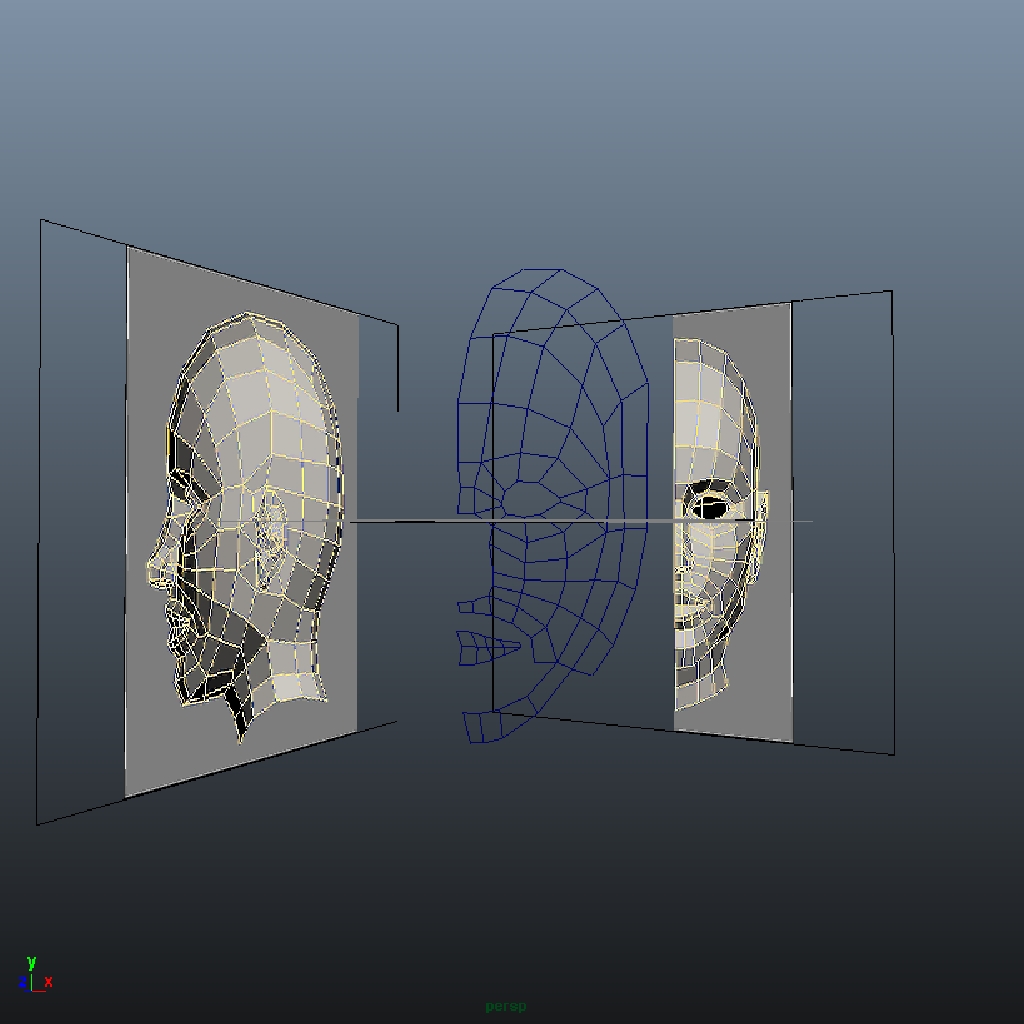
As part of my final design, I will have three theatre masks hanging on one of the walls, happy, sad and no expression. As this shape is quite organic and hard to model I wanted to get these out of the way first. So here's my progress so far....

I found a generic head model off the internet and added it to image planes for reference.

Using the create polygon tool and the front and side images, I began to sculpt an eye socket and the basic shape of a mouth.

I extruded the edges around the nose and began to sculpt the forehead.

Again following the geometry from the image planes made the chin.

I then combined the two pieces of mouth geometry and the rest of the face together and began on the nose.

Basic head shape ready for more detail, inserting edge loops etc.

I mirrored a proxy mesh so I could see the updates in real time when adding definition to the eye socket, cheek bones and mouth.
I duplicated the face and used the soft modification tool to warp the extra meshes into sad and happy expressions. Next up, texturing. 

Wednesday, 12 January 2011

The Shining - Movie review

The Shining - 1980
Director - Stanley Kubrick

1) The Shining Movie poster

Plot Summary / review:

Jack Torrance (Jack Nicholson) is a struggling writer who agrees to take a job as a caretaker of The Overlook Hotel in the Rockies. During the Winter months, the hotel gets cut off from civilisation due to heavy snow so the staff and guests vacate. The caretaker role comes with a minimal work load of general maintenance so Jack accepts the position with the view to work on his writing in solitude. Despite a warning from the general manager that the previous caretaker Delbert Grady, murdered his wife and two daughters and committed suicide, Jack relocates with his wife Wendy (Shelley Duvall) and his son Danny (Danny Lloyd).

2) Torrance family

Jacks son, Danny, appears to have clare voyant abilities which is channelled through his imaginary friend Tony. He shares this gift with the head chef Dick Hallorann (Scatman Crothers) who they meet prior to the last remaining staff vacating. Dick informs us that his grandmother used to call this gift "the shining". After talking with Danny, Dick warns him to stay away from room 237 before he leaves on his holiday.

3) Danny Torrance

4) Dick Hallorann

The Torrance's settle into a lonely family routine in their new "home". Jack struggles with his writing, Wendy does her housewife duties and Danny plays on his own, haunted by visions of two little girls and the elevator doors flooding the halls with blood. 

5) Grady girls

Jack becomes more irritable and short tempered with Wendy, angrily warning her to let him work in peace. His temperament spirals as time bares on and cabin fever takes its hold. Danny's curiousness gets the better of him and he explores room 237, just as Wendy finds Jack screaming from a nightmare after falling asleep at his typewriter. Jack explains he dreamt he killed Wendy and Danny with an axe, as Danny emerges with a ripped jumper and bruised neck. Wendy assumes the worst and blames Jack for the act of violence. Furious, Jack walks off to the "Gold Room" and sits at the bar, pleading and selling his soul for an alcoholic drink.

6) Gold room bar

Jacks madness deepens as he starts to imagine he is talking to staff within hotel, disclosing that he did "accidentally" hurt Danny 3 years earlier and that he has had a drinking problem. He has an encounter with a young lady in room 237 who inadvertently turns into a rotting corpse and chases him out of the room. Back in the bar he meets the butler, who reveals himself to be Mr. Grady, who "corrected" his wife and daughters after they tried to escape the hotel and burn it down. Mr. Grady convinces Jack to correct his family as Danny was using his gift to bring in an outside party, Dick Hallorann.

7) Populated Gold room bar

Wendy discovers that Jack hasn't been working for the entire duration, instead he has typed over and over again "All work and no play make Jack a dull boy". After a confrontation with her insane husband, she manages to knock him unconscious and lock him in the food storage area. She discovers that he has sabotaged the radio and snow mobile making impossible for her and Danny to leave. Meanwhile, Dick Hallorann is attempting to reach the hotel via another snow mobile after a receiving a telepathic distress call from Danny.

8) The chase

After escaping from captivity, Jack pursues Wendy and Danny with an axe prompting the films most famous line "here's Johnny". Wendy and Danny get separated in the chaos as Dick Hallorann arrives at the hotel. Jack kills him with his axe, causing Danny to scream and reveal his location. Jack chases Danny into the Hotel court maze. Realising Jack is tracking his footprints in the snow, Danny retraces his steps and manages to escape his father who get's lost in the freezing snow. Meanwhile Wendy is haunted by ghostly apparitions in the hotel and escapes outside to find Danny. They escape in Dick Halloranns snow mobile, leaving Jack to freeze in the snow.

Stanley Kubrick adapted certain parts of Stephen Kings book "The Shining" into his own screenplay much to the dismay of die hard fans of the book. Kubrick's screenplay does not remove the supernatural element but puts more emphasis on the psychological affect of being cut off from the civilised World.  "If one is determined to find a super natural explanation for the strange goings-on in the old, grand, snowbound hotel in the Rockies, it is just barely possible to do so. But Stanley Kubrick really does not care. His adaptation of The Shining, Stephen King's pulpy haunted-house novel, keeps forcing reasonable — or non-occult — interpretations on the behavior, variously bonkers and bloody, that his camera records with its customary elegance." (Schickel, 2010).

Kubrick explores traditional domestic issues but amplifies their problems by placing the family in unique isolated location. All three of the main characters suffer from the isolation, asking the question if the ghostly apparitions are real or really part of their imaginations. "The movie is not about ghosts but about madness and the energies it sets loose in an isolated situation primed to magnify them." (Ebert, 2007)

Jack Nicholson delivers an outstanding performance as a father with a chequered past, descending into utter madness and chaos. Shelley Duvall survives a dreary opening act but affectively descends into shear terror as her husband stalks her. They are supported by excellent cameos from Phillip Stone as the Butler Gardy and particularly Joe Turkel as the eerie Lloyd the bartender. Kubrick was renowned for coaxing the best from actors. Reportedly reducing Shelley Duvall to tears through repetition of scenes and forcing Jack Nicholson to eat his least favourite food, cheese sandwiches to make him angry. A technique which translates on screen extremely well. However, the real star of the film is the hotel itself. Purposely well lit and shot with exquisite detail the Overlook has an uncanny, homely feel that makes it even more terrifying. "The Overlook would undoubtedly amount to one of the screen's scarier haunted houses even without its special feature, a feature that gives The Shining its richness and its unexpected intimacy. The Overlook is something far more fearsome than a haunted house—it's a home." (Maslin, 1980).

Bibliography

Ebert, Roger. Chicago Sun-Times review. 8th May 2007
http://rogerebert.suntimes.com/apps/pbcs.dll/article?AID=/20060618/REVIEWS08/606180302 - Accessed 10/01/11


Maslin, Janet. New York Times review. 23rd May 1980
http://movies.nytimes.com/movie/review?res=EE05E7DF1738E270BC4B51DFB366838B699EDE - Accessed 10/01/11

Schickel, Richard. Time Magazine review. 21st October 2010
http://www.time.com/time/magazine/article/0,9171,924179,00.html - Accessed 10/01/11

Illustrations

1) The Shining movie poster - http://www.moviecentar.com/wp-content/uploads/2010/02/The-Shining.jpg Accessed 10/01/11

2) Torrance Family - http://www.dvdbeaver.com/film2/DVDReviews33/a%20teh%20shining%20two%20disc/the%20shining%20PDVD_008.jpg Accessed 10/01/11

3) Danny Torrance - http://www.blogcdn.com/blog.moviefone.com/media/2007/10/shiningrevjma.jpg Accessed 10/01/11

4) Dick Hallorann - http://littleimg.com/files/614_hmlu1/86j6tch.jpg Accessed 10/01/11

5) Grady girls - http://farm3.static.flickr.com/2090/2172893968_51d1937aef.jpg Accessed 10/01/11

6) Gold room bar - http://popshifter.com/wp-content/uploads/2008/11/overlook-hotel-bar.jpg Accessed 10/01/11

7) Populated Gold room bar - http://parallax-view.org/wp-content/uploads/2009/10/the_shining_nicholson.jpg Accessed 10/01/11

8) The Chase - http://mmimageslarge.moviemail-online.co.uk/The_Shining_cmyk.jpg Accessed 10/01/11


Tuesday, 11 January 2011

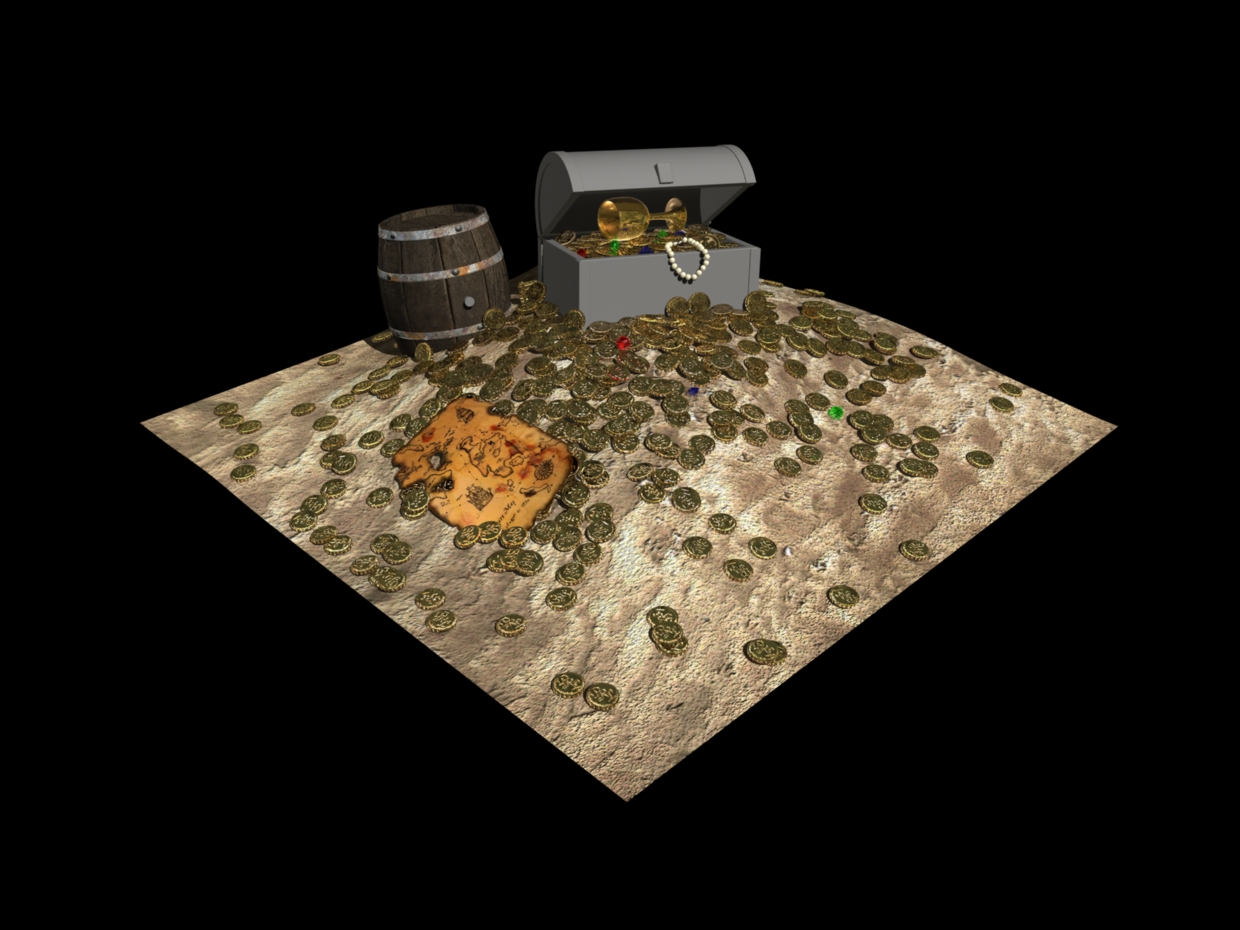
Pirates Cove ahoy!

Here's my Pirates Cove final image followed by progress images with UV maps...


Tuesday, 4 January 2011

Final Scene Sketch development

Here's a finished sketch of my initial concept. I'm still running with the idea that the room will be half decorated, the mirror reflecting the matte painting. The objects modelled in maya will represent the occupants belongings, the rest of the room decaying or unfinished symbolising a tragedy, hopefully giving it an uncanny feel. 


Following Phils, advice, the first image is too head on, was in Maya modelling mode and thinking of orthographic views to help me model. So, here's another angle...


I've been thinking about the era / time period my environment is set in. Since I am basing this on one of my favourite graphic novels I felt it was appropriate to base it when it was made, the 80's and set in a suburb of Detroit. I'm struggling to convey this in a enclosed room but have been thinking of modelling typical 80's objects such as the rubix cube, cassette and VHS tapes.